Showing posts with label #All grades. Show all posts

Tuesday, May 24, 2022

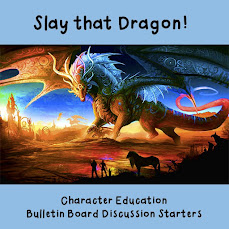
Slay that Dragon - FREE Character Education Bulletin Board Discussion Starters

  by All-American Teacher Tools


Do you have a dragon in your room? One that causes children to be disrespectful, angry students? This collection of 36 discussion starters helps children learn, week by week, about many social and moral dilemmas they face every day. Some examples include:

- Bullying

- Cheating

- Lying

- Sportsmanship

- Trust

- Group relationships

- Welcoming a new student

- Violence

- Overuse of technology

- Etc., etc. etc.

Full instructions are provided to help you implement this valuable weekly plan to generate discussion about character education.  For all grades!

It uses a dragon theme: "Keep the Dragons Out of Our Classroom" to help children understand that wrong behavior can be very dangerous.


Click HERE for more information.

Monday, June 14, 2021

FREE Father's Day STEM recipe

 by Renee Heiss

For all grades

All-American Teacher Tools


Fun for the whole family! Dad will enjoy watching his whole family come together to create a yummy appetizer. Everyone will learn some interesting STEM facts about the appetizer called "Nuts and Bolts." Everyone can participate - from a 2-year-old to Grandma!

This recipe is one of over 30 recipes in this book that show children how to work together as a family while learning kitchen skills and STEM facts.

Look for other recipes in the Chef Cappy's Kitchen series:

*** Chef Cappy's Kitchen - STEM Facts and Healthy Recipes for Family Fun - Holiday Favorites Edition won first place in the 2019 Pinnacle Book Achievement Awards - Cookbook category - sponsored by the National Association of Book Entrepreneurs!

Monday, January 22, 2018

A Birthday Cupcake for YOU!


Happy birthday to me!!!!! This week, I'm turning the big 4-9. How on earth did I get here? There's something about facing 50 that's making me get a move on some goals that I've been putting off. This week Wild Child Designs is having a store-wide sale. Come help me celebrate my birthday!

CLICK HERE TO VISIT!
                                    Tracy @ 

Pssssst! Have you followed Wild Child's blog yet? My followers get a monthly freebie! February's freebie is coming up next week. Join me and subscribe here.


Wednesday, December 13, 2017

Partner Picks (Christmas Theme)

Partner Picks (Christmas Theme)


Your students will LOVE using these cards to find their group of 2 using a Christmas theme! 
Just copy on card stock, laminate,and cut out. 
Then simply shuffle the cards and have students pick a card and find the matching ones to find out who their group of 2 will be for a game or project!
I've included enough cards with pictures and words for 40 students!
I've included the answer matches for you and directions!
◈◈◈◈◈◈◈◈◈◈◈◈◈◈◈◈◈◈◈◈◈◈◈◈◈◈◈◈◈◈◈◈◈◈◈◈◈◈◈◈◈◈◈
These activities would work for any grade level! Lots of fun!
◈◈◈◈◈◈◈◈◈◈◈◈◈◈◈◈◈◈◈◈◈◈◈◈◈◈◈◈◈◈◈◈◈◈◈◈◈◈◈◈◈◈◈


My TPT store:❤ Believe to Achieve Store by Anne Rozell

Follow my Pinterest boards:❤My Pinterest Boards

Follow me on Facebook:❤ My Facebook

Follow me on Instagram:❤ 
My Instagram

❤❤❤Follow me on my blog and receive a FREE EXCLUSIVE resource when you opt-in for my e-mail list : ❤ My Blog

◈◈◈◈◈◈◈◈◈◈◈◈◈◈◈◈◈◈◈◈◈◈◈◈◈◈◈◈◈◈◈◈◈◈◈◈◈◈◈◈◈◈◈
Join The Best of Teacher Entrepreneurs Marketing Cooperative at
http://www.thebestofteacherentrepreneursmarketingcooperative.com/2014/01/the-best-of-teacher-entrepreneurs.html
and get THOUSANDS OF PAGE VIEWS for your TpT products!
Victoria Leon's TpT Store

Go to http://www.pinterest.com/TheBestofTPT/ for even more free products!

Saturday, December 9, 2017

Christmas Thank you notes! (Color and B&W)

Christmas Thank you notes! (Color and B&W)


Christmas Thank you notes! (Color and Black and White Versions)

This is a set of 32 Christmas thank you notes! Just print and write your message on them!

There are two color versions and a black and white for each design.

I hope these beautiful thank you notes are a time saver for you and a delight to the recipient!

◈◈◈◈◈◈◈◈◈◈◈◈◈◈◈◈◈◈◈◈◈◈◈◈◈◈◈◈◈◈◈◈◈◈◈◈◈◈◈◈◈◈◈
★★★What teachers are saying about this resource:

 ✎"This was exactly what I was hunting for. Made thank you notes very easy this year!"

 ✎"This made it so easy to get thank you notes out on last day of school!" Catherine 

✎"Plan to use tomorrow!"Keri S.
◈◈◈◈◈◈◈◈◈◈◈◈◈◈◈◈◈◈◈◈◈◈◈◈◈◈◈◈◈◈◈◈◈◈◈◈◈◈◈◈◈◈◈


My TPT store:❤ Believe to Achieve Store by Anne Rozell

Follow my Pinterest boards:❤My Pinterest Boards

Follow me on Facebook:❤ My Facebook

Follow me on Instagram:❤ 
My Instagram

❤❤❤Follow me on my blog and receive a FREE EXCLUSIVE resource when you opt-in for my e-mail list : ❤ My Blog
◈◈◈◈◈◈◈◈◈◈◈◈◈◈◈◈◈◈◈◈◈◈◈◈◈◈◈◈◈◈◈◈◈◈◈◈◈◈◈◈◈◈◈

Join The Best of Teacher Entrepreneurs Marketing Cooperative at
http://www.thebestofteacherentrepreneursmarketingcooperative.com/2014/01/the-best-of-teacher-entrepreneurs.html
and get THOUSANDS OF PAGE VIEWS for your TpT products!
Victoria Leon's TpT Store

Go to http://www.pinterest.com/TheBestofTPT/ for even more free products!

Thursday, November 9, 2017

4 Ways to Balance Literacy Instruction + Free Writing Resources!


Nicki pinned me to the sky, like Mrs. Brown pinning our constuction paper snowmen to the classroom bulletin board. I gripped the handles tightly while my legs dangled uselessly from the teeter totter seat. 

"Put me down!" I ordered. 
"Make me!" she sneered. 
I began to bounce on the seat and swung my legs wildly.  But, it was no use, I was at her mercy. I hung there and plotted my revenge. When I got the chance, I left her dangling in the air and let her down with a huge bump on the ground. 

Teaching language arts is a lot like the playground teeter totter torment that filled our recess time in grade school. There should be a balance between our reading and writing instruction. But with recent laws that focus on reading performance and student retention being enacted around the United States, the curriculum focus has shifted to reading instruction. Regardless of what research on language arts learning tells us, retention laws and the curriculum mandates that follow are not in the best interest of our students. 

What we know is that reading and writing skills develop hand-in-hand, and that as soon as we teach them in isolation or ignore one to give more time to the other, we cripple our students thinking skills and language development. In fact, it's imperative that we feel the same urgency with writing instruction as we do with reading. "How?" you ask. Your teaching practices need to be equitable. No subject should be left hanging in the air on the language arts teeter totter. You need to strike a balance. The teaching practices you implement in your reading block should be implemented in your writing block.


Guided Reading/Guided Writing

In reader's workshop, we teach guided reading and strategy groups. If you have equitable language arts instruction, then you also teach writing in small groups.  In order to do this, you have to know your writers. Here's how I do it:
  • I give a writing pre-assessment for the unit we're on. We use Writing Pathways by Lucy Calkins, but you can do this with any writing rubric or scoring initiative your district mandates.
  • I create a "nugget sheet." This is a simple spreadsheet on which I list my students in alphabetical order and the writing goals of our current unit at the top. I enter their scores for each writing goal (elaboration, conventions, development, structure, etc.).
  • I highlight areas of concern on the spreadsheet.
  • I group students by those areas of concern. 
  • I either meet with them one on one, or I call them together for a guided writing/writing strategy group lesson. This takes place after the mini-lesson of the day, and it usually lasts about 10 minutes. 
Guided writing helps me differentiate for my students and gives me another chance to watch them while they practice.


Suck It Up, Buttercup

Write With Your Students

For many teachers, one of the scariest parts of teaching writing is that you must write with your students. Every day in reader's workshop, you probably read aloud to your kids. While you read aloud, you stop and think aloud. You make comments. You ask questions. You model what readers do when they read.

Do you model what writers do when they write? Young writers need to see their teachers writing aloud.  They need to hear the thinking their teachers are doing while they make writing decisions, while they make writing mistakes, and while they make writing revisions. In order to do this, you gotta suck it up buttercup and do what you are asking your students to do. NO EXCUSES. This practice is too powerful to ignore.


Copycat Your Favorites 

& Bridge Both Workshops

This requires some thinking and planning on the part of the teacher, but WOW! Does it work! When we teach reading, we teach students about figurative language, idioms, proverbs, puns, and descriptive language. In fact if you ask, many teachers will tell you that these are some of their favorite lessons to teach. They are fun, aren't they? 

But are you teaching students how to write these? One of our huge fifth grade writing goals is for students to develop writer's craft. During reader's workshop while I'm reading aloud, I'll stop and identify sentences where the author has used figurative or descriptive language. We'll talk about why the author chose the words she did. We'll write the lines down on chart paper and talk about how they help us visualize and understand what we are reading. 

Then later, in our writing block, we'll go back to those lines on the chart paper. We'll pick a lackluster line or passage from our own writing, and we'll try to copy what the author did. We don't use her words, but we use her strategy or technique. 

If you do this enough, use your mentor text as a bridge between your reading and writing instruction, you'll begin to see your students thinking as writers. Which, by the way, develops analytical thinking, one of the deepest forms of comprehension. 

Make the connection between reading and writing visible.


Stamina: It's Not Just About Reading

As teachers, we put so much energy into building our students' reading stamina. We want our kids to read at home. We provide independent reading opportunities in our classrooms. We graph our minutes read in data notebooks. We send home reading logs. But what are we doing to build our students' writing stamina?

One of the ways I help my students "train" to increase their writing stamina is by assigning 20-30 minutes of free writing a night. It's funny, but as soon as I say the words "free write," there are gasps of delight. My students know that they will be able to share their writing at the end of the week. This, alone, is a HUGE motivation for them.

At the beginning of the year, I set the routine of using stamina journals. One week, I ask my students to read every night. The next week, I ask my students to write every night. They reflect on their writing stamina every morning, from the night before, using a stamina reflection chart. They graph their writing minutes in their data notebooks. They discuss the quality of their writing sessions. We talk about what writer's do when they lack focus. We brainstorm ways to help ourselves write stronger and longer. This type of problem solving is something we do in reader's workshop. But guess what? It works in writer's workshop, too.


I hope this blog post has given you some take-aways to enrich your language arts instruction. Some of the resources I use in my writer's workshop are below. They're a great place to start if you're wanting to empower your student writers. Some are free!


This week I've linked up with some FABULOUS educators for our monthly Teacher Talk focus. Check them out below!


Tuesday, September 22, 2015

FREE FONTS -"Personal Use Download"

I have gotten crafty on myself and have been creating fonts that I just absolutely adore! I'm considering this a beautiful mess since my life while creating these was a beautiful mess with a newborn and a four year old. I didn't realize for, well, my entire life that I was able to create fonts that actually look great when put on paper and they do! I worked to get the fonts I've created so far into a Free download at my TpT store. Yes, that's right! A free download for you to use for your personal crafts!! I hope you love them! Just click on the image below! Please feel free to leave some comments!! Thanks!

Barnett's School House

If you would like to get updates on NEW and CURRENT resources...

Thursday, May 14, 2015

English Language Arts - End of the year activites (free and paid)

As the end of the school year approaches, it is increasingly difficult to motivate students and to stay motivated yourself.

Allow me to help.  Teaching Made Easy offers a slew of FREE and PAID acitivites and units that are meaningful and fun. 

End the year right with NO PREP teaching.


Monday, May 11, 2015

How to Make Effective Collaborative Groups

By Deann Marin at The Best of Teacher Entrepreneurs II

Offering for Educators, Comprehensive Teaching Aides.
 If you'd like to see what else I have to offer please visit my store


I found that having children work in small collaborative groups made learning fun for both myself and the class. Interpersonal development is essential for students as they need to learn how to relate to each other in a positive way, small group activities allow them to do this effectively.

Group Structure: As I approach the new school year and get ready for my class, I look at last year’s  teacher’s recommendations to help figure out levels, once that is done, I make groups with one high level child, two with average ability and one lower level child. I also try to have 2 boys and 2 girls in each group. That way there is diversity in abilities and they can all help each other. I found that the best arrangement for groups is no more than 4 so if I have 25 students I will make 6 groups of 4 and one with 5.  Each group remains the same for one semester, and then we rotate. We would change groups 4 times throughout the year since we had 4 semesters. I liked having them work together for at least two months, getting to know each other, cooperating and allowing each child a chance to be heard.  Of course there are always one or two kids that have a hard time working with others.  If that occurs, you might pull them from the group and have them work on their own, esp if they are disruptive, until they can prove that they are able to work within a group. Setting up the rotations takes a bit of  work since you don’t want to have the same kids in the group more than once.  *See diagram.  

Participation:  Each child in the group has a particular job to do: leader, complimenter,secretary, person to pass things out, person to clean up, presenter, etc. Make sure that you let them know exactly what is expected of them.  Depending on the lesson, we play the pencil game, one person holds a pencil and it is their turn to do the talking, when they are done the pencil is passed to the next child, and so on. Everyone has a turn.  Sometimes they will write a  group  report and to make sure that everyone contributes, they have to initial the part that they have written. 

Click on image to download from Socrates Lantern's Tpt Store
Since it is important to put high level, 1 low level and 2 average students in each group, you might want to assign them a color and a number.  For example: Jane is a bright student, assign her blue 1; Kathy really struggles, assign her blue 4, John and Adam are average students, they would be assigned blue 2 and 3. When you do each rotation, you would need to make sure that they are with different classmates and labeled accordingly. Keep the number code to yourself, the class should know their color code.

Click on image to download from Socrates Lantern's Tpt Store
 Classroom set up:  I make two rows of horseshoes. Two members of the group are in front, the other two sit in back of them.  So when it is time for group work, the front row only has to turn their desk around to face the other two. Of course, this takes a bit of practice, but they eventually get it.  When we begin group work, it can become noisy, so I have to remind them to use inside voices, I might hold up a finger, ring a bell, or hold up a QUIET sign. You can also reward the quietest group with something that they would like.  

If you'd like to see a complete lesson using this technique please see my bundle, What is it Like to be an Archaeologist?  
Click on image to purchase from Socrate Lantern'sTpt Store

You might be interested in these items:


This post is from our awesome blog hop. Please take a look at these other blogs from some phenomenal educators.


1. DIY Farmwife: Kids Can Collaborate Here's How!
2. Heart 2 Heart Teaching: Role Playing in Groupwork
3. RCL: Collaborative Groups that Work

4.  Socrates Lantern: How to Make Effective Collaborative Groups

Please Visit Socrates Lantern's Social Media Sites